Recent comments in /f/explainlikeimfive
sirfuzzitoes t1_je2gq6z wrote
Reply to comment by BillWoods6 in eli5: How did people build bridges over deep and/or dangerous water if they didn't have the equipment to go under water? by Internetscraperds9
And that boy's kite string bridge? The Tacoma narrows bridge. They should have upgraded from kite string but at least we learned from it.
Vill13rs t1_je2gf7y wrote
Reply to comment by TheBertinator3000 in ELI5: if protein is broken down into peptides in the stomach/digestive tract, why would consuming something like "active collagen" do anything? by Alexander_Elysia
I've worked in 2 natural/organic grocery stores over the span of 3+ years that emphasized supplement sales and I can confidently say that a solid 85-90% of it is all snake oil. Vitamins, minerals, protein powders, CDB oils, those are fine.
But when you have people asking you for shit like horny goat weed to help with their sexual dysfunction, you know they're easily scammed and unregulated supplement companies bank on that. Worst offender by far is the company Terry Naturally. Go out of their way to claim their products cure cancer and shit. Which does go against what are called DSHEA laws, the only thing really protecting consumers from being conned by statements like that, but they're so hard to enforce on employees in smaller stores. So the cycle continues and people think dropping a stack on whatever newest all natural, organic health craze are all the poorer for it.
But that's just my soapbox moment.
Vadered t1_je2g7lo wrote
Reply to ELI5 When companies say that their product is nontoxic, what exactly do they mean? by shake--and--bake
In the US, it means it does not consist of ingredients which are known to be toxic - to cause illness, disability, or death. This includes ingestion, contact, and airborne toxins, both short-term and long term. Furthermore, it's restricted to only reasonable use/exposure - everything up to and including water will poison you if you eat/drink enough of it, after all!
Pandepon t1_je2ezyl wrote
Reply to ELI5 When companies say that their product is nontoxic, what exactly do they mean? by shake--and--bake
It means it doesn’t contain chemicals that cause damage to the body. Some people are concerned about long term exposure such as ingesting residue or getting it on their skin that some folks may be sensitive to.
Also non-toxic means that if it is accidentally ingested in concentrated form or gets on the skin or in the eyes it shouldn’t cause severe damage usually caused by chemicals
mcarterphoto t1_je2en9n wrote
Reply to comment by Target880 in ELI5 How do scientists know probes (Like Voyager I) aren't going to get swept up in the orbit of another celestial body? by remorsefulDownfall
>If you were on an asteroid it is extremely unlikely you could see another with your naked eye.
I remember science fiction shows when I was a kid, and they'd go through "The asteroid belt!!!' or a "meteor storm!!!" and were avoiding what looked like dozens of balls of crumpled-up foil, banging into their space ship. I think a lot of nerdy kids pictured the asteroid belt as a shotgun blast of planet chunks bouncing off each other. If one really want to bump into a lot of stuff in space, they might choose Saturn's rings though.
[deleted] t1_je2edyt wrote
arpus t1_je2e6ip wrote
Reply to comment by JimmyTorpedo in ELI5: How is a high level of precision maintained during the construction of a building to make sure its built square, level all around? by phenols
Nothing a little mud can't fix.
8 coats of mud later.
Any-Growth8158 t1_je2dxol wrote
Reply to ELI5: If digital data is stored in 0s & 1s, how does the reader know how many of the digits to take into consideration? by distinct_oversight
Bytes are usually organized into words which can be multiple bytes and are the basic unit handled by computers (primary width of the registers used by the CPU usually). The computer itself just performs the requested operation on the word whether that is some arithmetic, logical, store, rotation, shift. The computer does NOT care what the data represents it it just does what it's told.
Interpretation of the data is left up the the software. I (or my compiler) will frequently stuff multiple items within a single word. I do a lot of microcontroller stuff and we are very limited on the amount of program and data memory available. My code will know that my data is located in bits 4 through 8 of the word--because I wrote the code and designed it that way. To access this data I need to do extra operations like shifting the word 4 bits to the right and then masking (setting to zero) all the bits 4 and greater of the word. This leaves me with the data of bits four through eight.
In the example above I've reduced the required data memory by packing the data into just the required bits; however, I've slowed down my code--it requires extra operations to access the data. On modern computers, the memory is essentially limitless and you'd never really bother to pack the data. Speed is more important so you'd just put your 4-bits of data in its own word and waste the unused bits. (I'm talking simple program data/variables--if you're doing movies or something you will likely compress the hell out if it).
JimmyTorpedo t1_je2dmzi wrote
Reply to comment by arpus in ELI5: How is a high level of precision maintained during the construction of a building to make sure its built square, level all around? by phenols
And if nothing is square....blame the drywall-ers!
Dman1791 t1_je2d1i0 wrote
Reply to ELI5: If digital data is stored in 0s & 1s, how does the reader know how many of the digits to take into consideration? by distinct_oversight
The most accurate short answer is "it depends."
At the processor level, everything is standard lengths and all the interpretation is physically wired into the chip. As an example, many ARM processors (used mostly in phones and such) operate with 32-bit long instructions. A specific part of those 32 bits contains what's called an opcode, which tells the processor how to interpret the rest of the bits.
At the programming level, you need some way to keep track of what format each piece of data is in. If you're programming in assembly (the lowest level language), it's up to you and you alone to make sure everything is being read properly. In something like Java, the language makes you to choose what type of data a variable is and then keeps track of it for you. In something like Python, the interpreter automatically assigns and keeps track of it without you having to do anything.
At the file level, the program you're feeding the data will try to read the file based on its extension. Most file types also have a "header" which is basically a special part at the start of the file that tells you about how to read it. For example, a text file will have a header that tells you which encoding it's using, which lets the program know things like how many bits there are per letter, and which patterns mean which letters.
arpus t1_je2cgq7 wrote
Reply to ELI5: How is a high level of precision maintained during the construction of a building to make sure its built square, level all around? by phenols
Architect/developer here:
A building is usually not very precise compared to manufacturing tolerances. Look at your counters and where they meet walls. The whole notion of trim and caulking is to hide these imperfections. Even with skyscrapers, you have to account for minor settling and expansion of materials.
Secondly, in terms of construction technique, you either have a plumb or a laser level to make sure you're building plumb and straight. In today's construction, you'll essentially pour your slab and the framers will draw in all the walls on the floors with a tolerance of about a 1/2". They then build straight, and level walls; even if the floor is wonky.
When the building is framed, other trades come in and work with whats on site as it is built. So, for example, you'd come in with window shop drawings afterwards and measure the openings. Then you'd shim and fit in your windows to roughly the opening, and the waterproofing/cladding will work with what is there, and cut things on-site to make sure it more-or-less fits, rather than whats on the plans.
That's why ever subcontractor hates each other. The guy before you installing things can really mess up your contract.
TL:DR; its accurate enough to be hidden with trim/joints/finishes, but also lasers.
wpmason t1_je2c72j wrote
Reply to ELI5: How is a high level of precision maintained during the construction of a building to make sure its built square, level all around? by phenols
A shocking amount of construction is not level, square, or plumb. Close enough to where it can be unnoticed is the threshold typically used.
But there’s always a lot of levels, squares, plumb lines, and measurements happening. Also, lots of math.
zachtheperson t1_je2c4n0 wrote
Reply to ELI5: If digital data is stored in 0s & 1s, how does the reader know how many of the digits to take into consideration? by distinct_oversight
You would write in known lengths such as "each number will be 8 bits," as well as extra numbers here and there that might say things like "the first number X is how long the list is, the next X numbers are the list, the number Y after that is how many letters there are, followed by Y number of letters."
The programmer gets to determine all of these things and make up the rules. It's what makes things like reverse engineering file formats difficult, since the file could be laid out in any format.
If you want to see this being done in real time, check out the Metroid Prime Modding Discord. They've been reverse engineering the original GameCube game for years, and recently the remastered dropped so they're currently in the process of tearing that apart and figuring out how the data is laid out so they can read it.
EquinoctialPie t1_je2bizh wrote
Reply to comment by remorsefulDownfall in ELI5 How do scientists know probes (Like Voyager I) aren't going to get swept up in the orbit of another celestial body? by remorsefulDownfall
Here's a website that explains the math to calculate an orbital trajectory. The math isn't really something that can be explained like you're five though. You'll need to have a solid understanding of algebra and trigonometry to be able to use it.
Target880 t1_je2b6kb wrote
Reply to comment by remorsefulDownfall in ELI5 How do scientists know probes (Like Voyager I) aren't going to get swept up in the orbit of another celestial body? by remorsefulDownfall
The asteroid belt is not like in movies. The average distance between objects is about 1 million km, a bit less the 3x the distance to the moon. If you were on an asteroid it is extremely unlikely you could see another with your naked eye.
If you could see another astroid you are likely to be close to one of the four larger asteroids Ceres, Vesta, Pallas, and Hygiea, they contain 60% of the total mass of the asteroid belt. The total mass of the asteroid belt is about 3% of the mass of the moon.
We do know where the planes in the solar system are and it was because of how they lined up that Voyager I and II were launched.
Voyager, I did flybys of Jupiter and Saturn and exploited their gravitational field to do a gravity boost and increase the speed.
Voyager II did flybys if Jupiter, Saturn, Uranus, and Neptune.
Both have thrusters that were used for small maneuvers so the flyby was exactly as what desired.
There are no unknown objects in the solar system that has enough gravity to capture an object that moves at the speed of the probers.
It it what they encounter in thousand, million or billion of year that is not exactly known
[deleted] t1_je2a04z wrote
[deleted] t1_je29m3y wrote
PeteyMax t1_je299lw wrote
Reply to comment by jaxxop in eli5: what are the benefits of having parks, a lot of trees, and green areas in big cities? by blueberrysir
I lived in Toronto for a total of about 1 year, 2/3 of that time near the ravines. One time my friend took to the museum of natural history, where we could view stuffed animals, live insects, and small mammals neurotically pacing back and forth inside glass cages. Pretty awful considering just hiking in the ravines I saw foxes, coyotes, otters, a great horned owl, and many other forms of wildlife, all in their natural habitat.
segelnhoch3 t1_je296t6 wrote
Reply to comment by mikeholczer in ELI5: How is a high level of precision maintained during the construction of a building to make sure its built square, level all around? by phenols
To add onto this: there are tools that project perfectly vertical or horizontal lines with lasers, which you can then use to build your wall/floor/...
BillWoods6 t1_je295xg wrote
Reply to comment by DarkAlman in eli5: How did people build bridges over deep and/or dangerous water if they didn't have the equipment to go under water? by Internetscraperds9
> Suspension bridges at a basic level only required a rope to be pulled across a river, and that can easily be done with a boat.
Or by other methods.
> Ellet's brainstorming sessions with his men raised several ideas that could enable a line to be suspended across the gorge; these included firing cannonballs with the line attached, towing it across the river with a steamer, and tying it to a rocket that would then be launched across the gorge. ... Ellet also took the opportunity to generate publicity for his project. Organizing a kite-flying contest, he offered $5[nb 6] to any boy who flew a kite across the gorge and secured the kite string to the other side.[23]
https://en.wikipedia.org/wiki/Niagara_Falls_Suspension_Bridge#Charles_Ellet_Jr.'s_temporary_bridge
Target880 t1_je295uq wrote
Reply to eli5: How did people build bridges over deep and/or dangerous water if they didn't have the equipment to go under water? by Internetscraperds9
They did not build bridges over "deep and/or dangerous water" before diving equipment existed. That is bridges with support in the water. Rope bridges and other simple suspension bridges have been built over rapids if the distances were short enough.
If it is even shorter you can build a solid bridge that is just supported by the ground on the sides of the river.
In relatively shallow and nice water you do not need to go underwater you can still expose the bottom.
The simplest way to explain this is by building an alternative path for the water and then making a dam with dirt and rock in the river. The old river bed is now dry and you can work on it. Destroy the dam and fill in the digestion and you have a bridge. It might not be the simple thing to do for a large river but it was possible.
You do not need to do that for all of the river, build a cofferdam that encloses parts of the river remove the water from the side and you can work there. The wall of the dame can be large baskets you fill with rocks and dirt to keep the water, coffer is an old word for the base.
Or build a small coffer dam by driving wooden pillars into the river bottom to remove the water. It only needs to be just larger than the pillar you intend to build to support the bridge. This is still common we just use metal walls bridges and other stuff that need access to a river bed.
https://en.wikipedia.org/wiki/Cofferdam
Another way is driving a wooden pillar into the bottom with a pile driver and letting that support a wooden bridge that extends a bit out in the air so you can drive down more wooden pillars. Ceasar's army built bridges like that over the Rhine River in 10 days. It looked something like
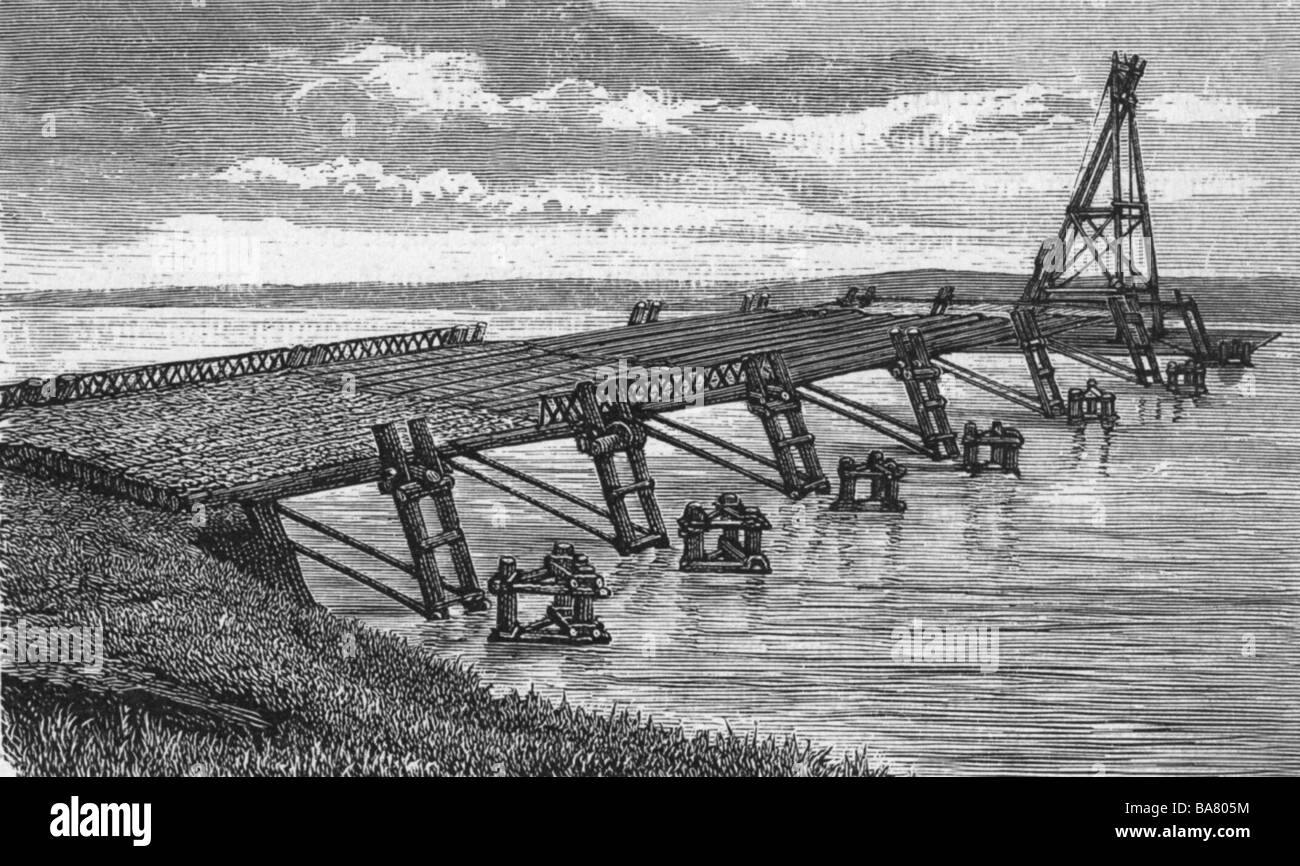
https://en.wikipedia.org/wiki/Caesar%27s_Rhine_bridges
So they built bridges over rivers with support in the river since ancient times but it was not very deep or dangerous water where it was done. It was quite shallow
PeteyMax t1_je28shq wrote
Reply to eli5: what are the benefits of having parks, a lot of trees, and green areas in big cities? by blueberrysir
Study after study has been done showing the benefits of green space on mental health. Just from experience, I can tell you my blood pressure goes down about 20 points when I go walking in a quiet, empty forest.
edit: Did you know that the number one risk factor for schizophrenia is urban living?
jelder t1_je28mre wrote
Reply to eli5: what are the benefits of having parks, a lot of trees, and green areas in big cities? by blueberrysir
Because if you don’t build parks, people will be so desperate for greenery that they will trample all over the cemeteries. True story, this is what actually happened before city parks.
Gnonthgol t1_je28ll1 wrote
Reply to eli5: How did people build bridges over deep and/or dangerous water if they didn't have the equipment to go under water? by Internetscraperds9
There are many different ways to do this depending on the available technology, cost and the ground conditions. For example we know the ancient Romans had pile drivers on barges which they could use to drive long piles into the river floor that would support the bridge. Some rivers would also dry up for some parts of the year, at least enough to build a bridge. Or the rivers could be partially drained for the construction. But even with these different techniques available the most common was still ferries at river crossings. Bridges are relatively new most places, most of them less then a century old.
remarkablemayonaise t1_je2h616 wrote
Reply to comment by TheJeeronian in ELI5 How do scientists know probes (Like Voyager I) aren't going to get swept up in the orbit of another celestial body? by remorsefulDownfall
I'm not sure which of us is confused. Conic sections are solutions to two body problems or similar (the Earth is orbiting the centre of mass of the solar system, not the sun itself).
Three body problems rely on second by second force simulations. Instantaneous force simulations lead to accelerations which lead to changes in velocity and location, which feedback to the force simulations.
Euler's method and similar are ways to solve differential equations like above.