Recent comments in /f/explainlikeimfive
enderverse87 t1_iue95yv wrote
Reply to comment by Proof_Objective_5704 in ELI5: Why is it easy to drink a large volume of beer, compared to such a large volume of any other liquid? by Proof_Objective_5704
It seems to be purely practice and addiction. Nothing specific to alcohol.
Proof_Objective_5704 OP t1_iue8o90 wrote
Reply to comment by enderverse87 in ELI5: Why is it easy to drink a large volume of beer, compared to such a large volume of any other liquid? by Proof_Objective_5704
You can drink 10 pepsis in a night?? Why would you ever practice that, lol.
My theory is that the effects of alcohol are somewhat like pain relief, in that you don’t really notice as much when you are full or your body is telling you to stop.
I don’t know if this is correct though, which is why I’m asking. I also wondered if there is some sort of affect on the stomach that allows you to consume more without feeling full.
veemondumps t1_iue8nmo wrote
Reply to Eli5. I watch alot of historical documentaries, and I want to know why we never get to see direct translations of what the crazy dictators are saying. They're narrated "about", but we never get to hear or know what they're actually saying. by 4realfix
In the modern world, nobody listens to a speech from start to finish. At best, the vast majority of people will get a handful of ten to fifteen second long clips from their favorite news and/or social media channel. So that's how modern speeches are written - they tend to be very short and are essentially just brief soundbites that have been stuck together in such a way to make it easy for other people to edit them down into clips.
Historical speeches were much longer - Hitler's speeches would often go on for >2 hours and that wasn't unusual among politicians that were good at giving speeches.
Historical speeches are often exhaustive explanations of what the speaker thinks is the problem, how they intend to solve the problem, and why other proposed solutions to the problem are inferior to theirs. While you can often pull brief snippets out of those speeches - such as "the only thing to fear is fear itself" - stuff like that often doesn't translate well from foreign languages.
Making sense of historical, foreign language speeches requires you to listen to the whole thing, which is probably several hours longer than the documentary you're watching.
NolosRTX OP t1_iue8m8f wrote
Reply to comment by Target880 in ELI5: If the James Webb telescope is able to look 13.6 billion light years away, why aren't we looking at the surface of planets to search for life? by NolosRTX
Wow, Thank you so much for the detailed answer and the links will definitely check them out and give it a read. Really interesting.
Proof_Objective_5704 OP t1_iue8b3y wrote
Reply to comment by Omphalopsychian in ELI5: Why is it easy to drink a large volume of beer, compared to such a large volume of any other liquid? by Proof_Objective_5704
Sure it’s damaging, but drinking 6-10 Pepsis is damaging too.
Spirited_Hamster2606 t1_iue87b0 wrote
Reply to Eli5. I watch alot of historical documentaries, and I want to know why we never get to see direct translations of what the crazy dictators are saying. They're narrated "about", but we never get to hear or know what they're actually saying. by 4realfix
They just talk about fake news and how the other politicians are traitors that should hang .. and .. sometimes they call their own RINOs ... as you see .. SSDD
BlowjobPete t1_iue7w14 wrote
Reply to Eli5. I watch alot of historical documentaries, and I want to know why we never get to see direct translations of what the crazy dictators are saying. They're narrated "about", but we never get to hear or know what they're actually saying. by 4realfix
I'm guessing the documentaries don't dwell on those speeches for a long time, right?
It's hard to show just one excerpt from a speech that is potentially an hour-or-so long without context. The speeches need to be summarized because you wouldn't be able to glean what they're talking about just from listening to a few minutes.
Here's Hitler's speech about Stalingrad:
https://en.wikisource.org/wiki/Adolf_Hitler%27s_Stalingrad_Speech
You'll see it's kind of all-over-the-place and choosing just a few lines from it to summarize is hard. In this speech, he talks about his own life, his coming to power, he compares bolshevism to communism in Wiemar Germany, he talks about previous German military successes, and so on. Picking a few lines from this speech to summarize it is very hard.
[deleted] t1_iue7sm1 wrote
Target880 t1_iue7kj7 wrote
Reply to ELI5: If the James Webb telescope is able to look 13.6 billion light years away, why aren't we looking at the surface of planets to search for life? by NolosRTX
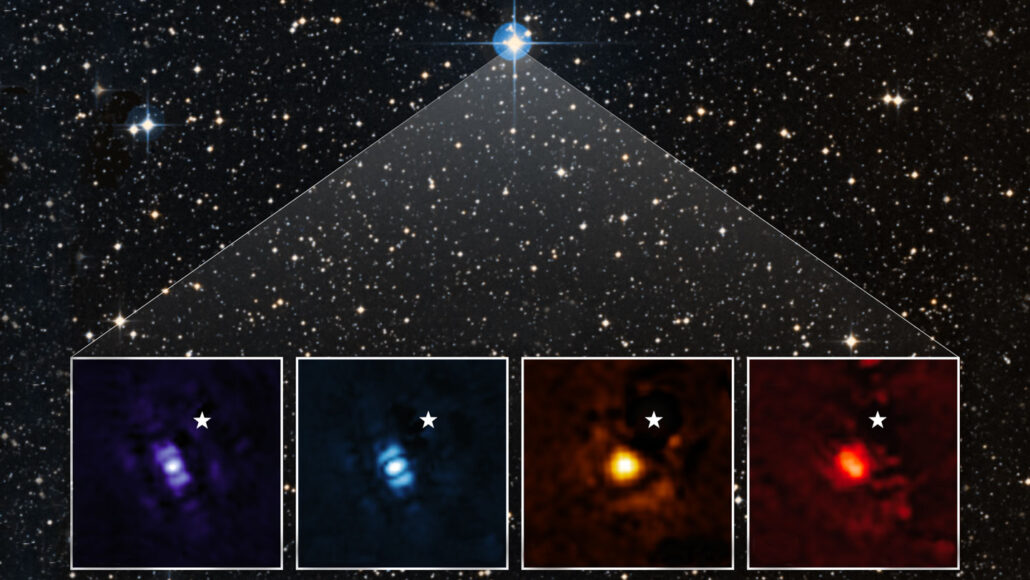
James web have looked at exoplanets. But it will at best see them as a few pixels what can be done is to analyze the spectrum of the atmosphere. That way we can detect what gases are there and we live free oxygen is an indicator of life. https://www.sciencenews.org/wp-content/uploads/2022/09/090122_lg_jwst_feat-1030x580.jpg is a exoplanbet it observe. It is a gas gignat 20x the mass of Jupiter. This is the resolution it can get of a expolnaet
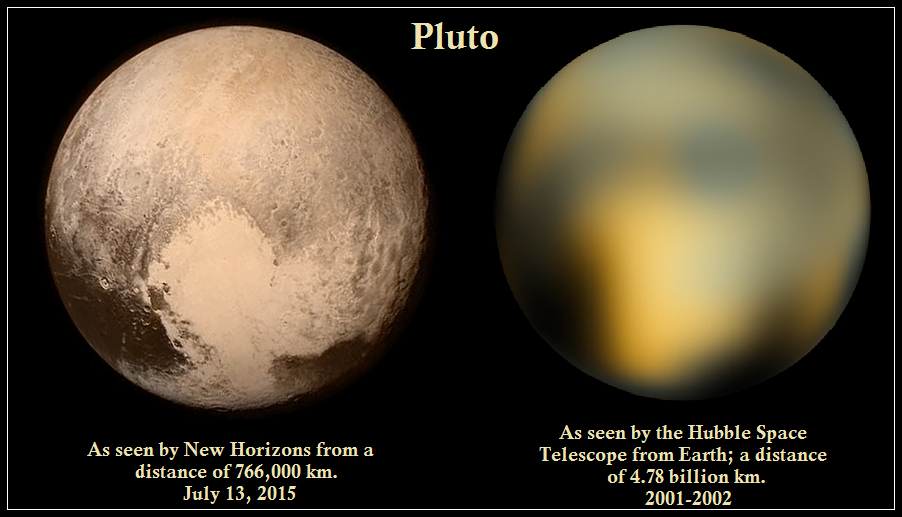
Planets are tiny and very far away. Here can you see Pluto from Hubble and New Horizons The max resolution of an optical system depends on the diameter of the aperture. For Hubble, it is 2.4 meters, and James Webb has 6.5 meters let's call that 3x the diameter. So Jamers Webb could only manage 3x the resolution of Pluto and compared to any exoplanet Pluto is large in the sky. This is ignoring any effect of the longer wavelength light that James Webb observe that reduces the increase relative to Hubble. New Horizons was very close to the Plut so it can have a lot higher resolution
The image from Jamew Webb and another telescope you see in the sky are surprisingly large. An extreme example is https://apod.nasa.gov/apod/image/0612/m31abtpmoon.jpg the moon and the Andromeda galaxy to scale. It might be 2.4 million lightyears from us but is a galaxy of billions of stars. It is the second largest thing in the sky after out own galactic core, the milky way. The sun are the same size of the moon in the sky. You can see the center of it with your naked eye as a white fuzzy area. It is hard to see because it is dim not because it is small.

IF you look at a image https://www.nasa.gov/image-feature/goddard/2022/nasa-s-webb-reveals-cosmic-cliffs-glittering-landscape-of-star-birth it is not the size of planets is is a gas cloud man
>Called the Cosmic Cliffs, Webb’s seemingly three-dimensional picture looks like craggy mountains on a moonlit evening. In reality, it is the edge of the giant, gaseous cavity within NGC 3324, and the tallest “peaks” in this image are about 7 light-years high.
The closes star to earth, except for our sun, is 4.3 light years. Pluto is 0.00055041 light years from us. Our solar system would be in around 1 pixel in that image. The image width is enough to include another star system
The Cosmic Cliffs is a part of https://en.wikipedia.org/wiki/NGC_3324 that is 11 arcmin in size 1 degree = 60 arcminute so 11 arcmins =11/60 =0.18 degrees wide The moon is 0.5 degrees.
If it was bright enough you would see it as more than a dot with your naked eye, you would see some structure. The angular resolution of a human eye is around 1 arcminute = 0.02 degree. It is not too small to see with a nake eye in the sky, it is just too dim for your naked eye
Pluto is 0.06 to 0.11 arcseconds. 1 arcminut = 60 arcsecond so when closed to earth it is 0.11/60/60 = 0.00003 degrees
This mean NGC_3324 is =0.18/0.00003=6000 times larger in the sky the Pluto
Humans have resolved a few stars to more than a single do look at https://en.wikipedia.org/wiki/List_of_stars_with_resolved_images where 1 mas =0.001 arcsecond. Pluto is 110 mas in size when larges resolved star except for out sun is 50 mas.
So James Webb has and will observer more exoplanets. The are at best a few pixels in size. The stuff you see it the image that fills the frame is surprisingly large in the sky, we talk about lighyear across. it is just dim and the telescope is very good at collecting light
achambers64 t1_iue7c4r wrote
Reply to comment by the_original_cabbey in ELI5: Morse code is made up of dots and dashes. How did telegraph operators keep from losing track of where one letter ended and another began? by copperdomebodhi
If you’re using the 2020 book it’s out of date. The questions were updated in July 22.
anti_plexiglass t1_iue5zyx wrote
Reply to Eli5. I watch alot of historical documentaries, and I want to know why we never get to see direct translations of what the crazy dictators are saying. They're narrated "about", but we never get to hear or know what they're actually saying. by 4realfix
So that's why I cant know what the big Austrian artists speeches?
Cyborg_666 t1_iue5qzp wrote
Reply to ELI5: Morse code is made up of dots and dashes. How did telegraph operators keep from losing track of where one letter ended and another began? by copperdomebodhi
My question is, what if the receiver misses the first few dots and dashes for some reason or they're transmitted before he could start writing , how does he find out the first few letters or words?
MindStalker t1_iue5ll9 wrote
Reply to ELI5: If the James Webb telescope is able to look 13.6 billion light years away, why aren't we looking at the surface of planets to search for life? by NolosRTX
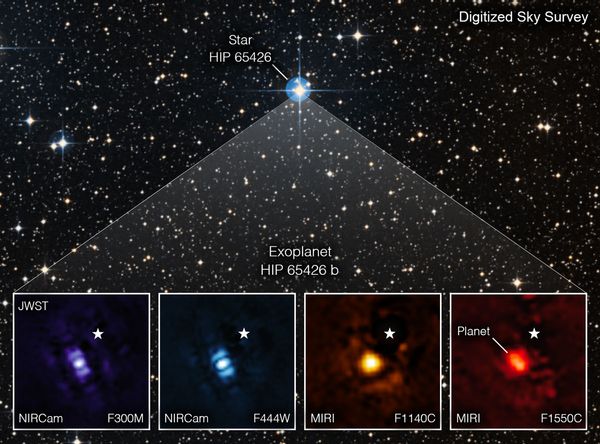
We have viewed some planets. So far this is the best image we've been able to obtain. It's not great, this planet is about the size of Jupiter. https://mediaproxy.salon.com/width/600/https://media.salon.com/2022/09/hip-65426-inline-01.jpg (Note these images are all different spectrums of the same planet)
HydromaniacOfficial t1_iue5afg wrote
Reply to comment by max_p0wer in ELI5: Why can we see differences between 60, 144, 165 and 240hz if the eye only can process 60fps? by Xyraph
Lots of games do simulate motion blur, but motion blur is terrible for shooter games which are what games benefit the most from super high fps
Luckbot t1_iue58vn wrote
Reply to Eli5. I watch alot of historical documentaries, and I want to know why we never get to see direct translations of what the crazy dictators are saying. They're narrated "about", but we never get to hear or know what they're actually saying. by 4realfix
That's to prevent people from falling for their sweet lies again. Dictators become dictators because they are charismatic and good at convincing people, and that can even work after their death.
Their speeches don't sound like crazy dictator. They sound very convincing when you don't analyze them thoroughly. They are very good at presenting seemingly great solutions that are only radical when you think through all the implications.
wdwhereicome2015 t1_iue584l wrote
Reply to comment by wagmoo in ELI5: When a bottle of whisky says 25 years, did they really make millions of gallons of that whisky 25 years ago? by wagmoo
If it is scotch then has to be in a barrel for a minimum of 3 years I believe. Then it will be tasted and they decide what to do with it. Mature it more, use it to be blended with other whisky etc
The age statement only relates to the youngest whisky in that bottle as well. For instance they could have 3/4 of the bottle filled with 50yo whisky, but to give it a younger taste and improve the palette of the whisky, they put 1/4 of the 25 yo in. As the 25 yo is the youngest, that is the age statement in of the bottle
fd4e56bc1f2d5c01653c t1_iue4d4k wrote
Reply to comment by Lonely_whatever in ELI5: Morse code is made up of dots and dashes. How did telegraph operators keep from losing track of where one letter ended and another began? by copperdomebodhi
Well here's an example: analbumcover. What is it?
Chromotron t1_iue4c7b wrote
Reply to comment by breckenridgeback in Eli5: Infinity ♾️ by [deleted]
> Consider a set S that is a subset of the reals,
That's where you went wrong: the set is simply not required to be contained in the reals. You can give any set X a total ordering such that the induced topology is discrete; similarly, we can give X a metric that makes it discrete, the discrete metric.
frenchtoaster t1_iue40yg wrote
Reply to comment by anotherSeggsOffender in ELI5: Morse code is made up of dots and dashes. How did telegraph operators keep from losing track of where one letter ended and another began? by copperdomebodhi
It shows up as a dash to me without backslash?
Yancy_Farnesworth t1_iue3uez wrote
We really don't know. There's a lot of theories but nothing confirmed.
The commonly accepted theory these days is a rocky metallic core (mostly iron/nickel), like the inner planets. But right above it is basically an ocean of liquid metallic hydrogen. Heat and pressure are essentially opposing forces when it comes to what state matter will take. Heat pushes the element toward gas, pressure pushes it toward solid. In the center of planets like Jupiter the pressure wins, hence the liquid hydrogen ocean. The only reason we don't think there's solid hydrogen there is that there isn't enough pressure for hydrogen to solidify at the temperatures in Jupiter's core.
Note that gas giants can get big. There's been some that we've seen that are borderline stars. If they got just a little bit more matter they would have enough gravity, and therefore pressure, to kick off fusion and turn the core into plasma from the heat.
eastwestnocoast t1_iue3ogz wrote
Reply to ELI5: Morse code is made up of dots and dashes. How did telegraph operators keep from losing track of where one letter ended and another began? by copperdomebodhi
Was just watching The Hunt For Red October and was wondering the same thing. Thanks for asking!
Pegajace t1_iue38bi wrote
Reply to ELI5: If the James Webb telescope is able to look 13.6 billion light years away, why aren't we looking at the surface of planets to search for life? by NolosRTX
Planets outside our solar system are way, way, way, way, way, way, way too small and dim to be seen in any detail by any space telescope.
Stars shine with the light of nuclear fusion; planets can only reflect the light of their parent star, and the teeny tiny fraction of the light that they reflect is almost always drowned out by the star's light.
Nebulae can be dozens of light-years wide; the famous "Pillars of Creation" 7,000 light-years away are about four light-years in length, or almost forty trillion kilometers. The largest planets are only about 150,000 km in diameter, or 250 million times smaller than the Pillars of Creation.
The_Condominator t1_iue9rwb wrote
Reply to comment by bullevard in ELI5: Morse code is made up of dots and dashes. How did telegraph operators keep from losing track of where one letter ended and another began? by copperdomebodhi
One of Humanities greatest gifts that set us apart from animals, is the magnitude of our pattern recognition