Recent comments in /f/history
johnmuirsghost t1_it6jfzn wrote
Reply to comment by Domeroni in Researchers look to unravel story of Islamic glass found in Scottish castle - HeritageDaily - Archaeology News by GullyShotta
I'm not interested enough in glass to read that book, but by God, I'm glad you were.
johnmuirsghost t1_it6jd8b wrote
Reply to comment by hazelquarrier_couch in Researchers look to unravel story of Islamic glass found in Scottish castle - HeritageDaily - Archaeology News by GullyShotta
Edit: this comment is a better answer.
Over hundreds of years, immersion in even weak acid can have an effect. Same as how splashing a bucket of water against a cliff won't do much, but given enough time, waves will scrape it away like butter.
[deleted] t1_it6jctw wrote
Reply to comment by Ferengi_Earwax in DNA sequencing finds first known Neanderthal family, including a father and daughter by marketrent
[removed]
_PM_ME_PANGOLINS_ t1_it6in1v wrote
Reply to comment by Mister_Vandemar in One of the longest ancient Roman inscriptions ever discovered in Britain is to go on display for the first time. by Demderdemden
There's about four different Latin words that sometimes get translated to "happy".
_PM_ME_PANGOLINS_ t1_it6ieal wrote
Reply to comment by RedDordit in One of the longest ancient Roman inscriptions ever discovered in Britain is to go on display for the first time. by Demderdemden
All Roman citizens had three names. Only slaves and foreigners would have fewer.
_PM_ME_PANGOLINS_ t1_it6htj1 wrote
Reply to comment by vikio in One of the longest ancient Roman inscriptions ever discovered in Britain is to go on display for the first time. by Demderdemden
A lot of the time (including today) people don't really think about what their names mean, they're just names. And a lot of the older Roman names (Ceasar, Antony, Vincent) have no definite origin, but here goes:
Elephant of Light the Seventh Severe Pious Obstinate Majesty
Elephant of Mars the Golden Priceless Pious Lucky Majesty
People's Seventh Geta
Light's Conqueror the Pious
Rejoicing Strongman the Shy
Geta isn't Latin or Etruscan, but appears to refer to an ancient Romanian tribe.
Ordinal names (e.g. Seventh) were traditionally used for numbering siblings, not in the way we use Jr. or III today.
johnmuirsghost t1_it6hjpl wrote
Reply to comment by FeisTemro in Researchers look to unravel story of Islamic glass found in Scottish castle - HeritageDaily - Archaeology News by GullyShotta
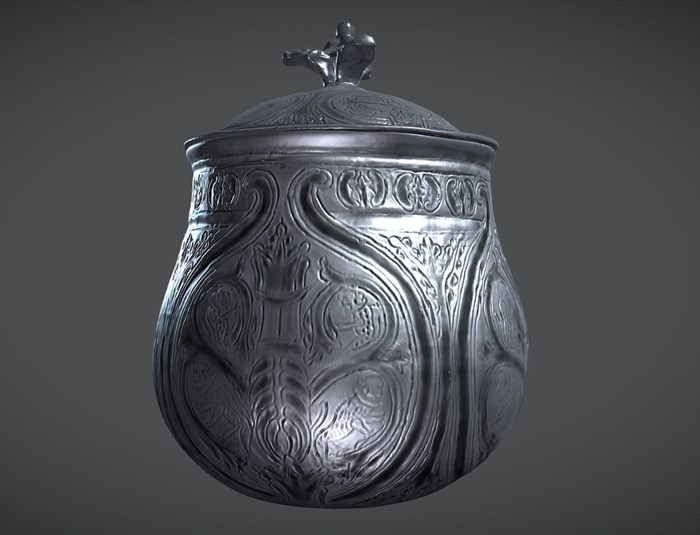
The Galloway Hoard, a Viking-era treasure cache discovered in south-west Scotland, includes a vessel engraved with Sassanid Zoroastrian designs.
InspectorRound8920 t1_it6h6j6 wrote
Reply to Was there mass migration of Roman citizens from Western Empire to Eastern Empire during degredation and after fall of Western part of empire. by [deleted]
the leading families? some did for sure moved away in the last years. But for the average citizens there wasn't much of a difference whomever was in charge
FooltheKnysan t1_it6h0wt wrote
Reply to comment by phenyle in Researchers look to unravel story of Islamic glass found in Scottish castle - HeritageDaily - Archaeology News by GullyShotta
And it would noticably degrade the bottle in a few centuries
AnaphoricReference t1_it6g2bg wrote
Reply to comment by Maximum-Bad-7295 in Was there mass migration of Roman citizens from Western Empire to Eastern Empire during degredation and after fall of Western part of empire. by [deleted]
The Romans had by the time of the official "fall" of the Western empire already introduced the practice of stationing Germanic mercenary cavalry directly with landowners and towns in Italy, so that the mercenaries could collect their own wages directly as taxes. This feudal societal organization would basically remain unchanged in the Ostrogothic and Lombard kingdoms. Landowners and mercenaries had a shared interest in preventing the peasants/commoners under their control from leaving if that impacted income, and would be definitely capable of hunting them down if they did.
I do not have the impression, if you look at the sources covering later attempts by the Eastern Roman empire to expand their influence in Italy at the expense of the barbarians, that they had much popular support for doing so. On the contrary: small Lombard feudal armies for instance regularly defeated larger but very low morale locally sourced (Eastern) Roman armies. And parents complained about their children dressing as barbarians to look cool. That doesn't give the impression that the average former Roman was willing to risk his life to be able to live under an emperor in Italy. At best you could describe it as an attitude of apathy.
materialisticDUCK t1_it6e8rh wrote
Reply to comment by breadempress in Researchers look to unravel story of Islamic glass found in Scottish castle - HeritageDaily - Archaeology News by GullyShotta
Thank you
Domeroni t1_it6e3cq wrote
Reply to comment by hazelquarrier_couch in Researchers look to unravel story of Islamic glass found in Scottish castle - HeritageDaily - Archaeology News by GullyShotta
You're correct for relatively short timescales but medieval Islamic glass was mostly of the soda-lime-silica type. On the shelf of a medieval castle it'd last a few lifetimes. But in wet and acidic conditions we find that the soda and lime components of the glass on the outer layers would react and change the structure of the material.
Glass has an impure and uneven lattice (which is good because it allows us to mould it at high temperatures), meaning water molecules can seep into gaps in the lattice and draw away structural components such as the lime. This happens incredibly slowly since the structural bonds are really strong. But over the course of centuries sitting in a peat bog we see that lime reacting away, leaving a brittle and opaque product.
The process is called weathering and I'd really recommend the book "Ancient Glass" by Julian Henderson if you're interested and want to read more
Ferengi_Earwax t1_it6dpic wrote
Reply to comment by RenegadeMoose in Was there mass migration of Roman citizens from Western Empire to Eastern Empire during degredation and after fall of Western part of empire. by [deleted]
The rugii, thuringians, and the jutes, cherusci, chatti, and batavii.. and those pesky Irish who created the kingdom of Dal riada. What a chaotic age.
Ferengi_Earwax t1_it6de6d wrote
Reply to comment by corodius in DNA sequencing finds first known Neanderthal family, including a father and daughter by marketrent
But that's not any fun, at least I didn't mention the feasting on baby...
tpproberts t1_it6az8b wrote
Reply to Was there mass migration of Roman citizens from Western Empire to Eastern Empire during degredation and after fall of Western part of empire. by [deleted]
I just visited Hadrian’s Wall at Birdoswald and the museum claims that the decline of supplies and pay forced the Roman soldiers (from all parts of the empire) to start local farms/businesses. They never left.
[deleted] t1_it6aln5 wrote
Relevant_History_297 t1_it6a9r7 wrote
Reply to Was there mass migration of Roman citizens from Western Empire to Eastern Empire during degredation and after fall of Western part of empire. by [deleted]
If you are interested in an in-depth discussion of societal changes and migration patterns during and after the decline and fall of (Western) Rome, I suggest Patrick Whyman's Fall of Rome podcast: https://podcasts.apple.com/de/podcast/the-fall-of-rome-podcast/id1141563910 He actually did some scholarship on the topic, so he knows what he is talking about
rosefiend t1_it691wc wrote
Reply to comment by Piemasterjelly in Researchers look to unravel story of Islamic glass found in Scottish castle - HeritageDaily - Archaeology News by GullyShotta
Lol generally I google stuff but tonight I was being lazy
[deleted] t1_it68yol wrote
Reply to comment by Wish_you_were_there in Researchers look to unravel story of Islamic glass found in Scottish castle - HeritageDaily - Archaeology News by GullyShotta
[removed]
breadempress t1_it68n2y wrote
Reply to comment by xmarketladyx in Researchers look to unravel story of Islamic glass found in Scottish castle - HeritageDaily - Archaeology News by GullyShotta
i mean, they’re probably looking for something more conclusive. less of “how could this have possibly come here” and more “how exactly did this make it here”
[deleted] t1_it68mas wrote
Reply to comment by WikiMobileLinkBot in Anglo-Saxon hall where kings and warriors dined discovered in England by unheated1
[removed]
phenyle t1_it68grs wrote
Reply to comment by hazelquarrier_couch in Researchers look to unravel story of Islamic glass found in Scottish castle - HeritageDaily - Archaeology News by GullyShotta
What about coke in glass bottle? Coke has like pH of 3
blonardo t1_it68ev1 wrote
Reply to comment by adam_demamps_wingman in Was there mass migration of Roman citizens from Western Empire to Eastern Empire during degredation and after fall of Western part of empire. by [deleted]
Dan Carlin has a bunch that are wonderful:
Punic Nightmares (about the punic wars) Celtic Holocaust (rome and the Celts) Death Throws of the Republic (great set about the fall of the republic and rise of the empire and lots of info on causes. Thors Angles - basically it's about the 'dark ages' but covers a lot of the fall of Rome's influence etc.
ungovernable t1_it681ro wrote
Reply to comment by AJ_Lounes in Was there mass migration of Roman citizens from Western Empire to Eastern Empire during degredation and after fall of Western part of empire. by [deleted]
There's a lot of junk conjecture in this thread, so first, I'm going to repost a link that a mod posted further down the line that I think will shed a lot of light on the subject:
https://en.m.wikipedia.org/wiki/Migration_Period
Second, while the "sudden collapse" way of thinking about the Western Roman Empire (i.e. that in 475 there was a prosperous empire, and that by 477 "here thar be dragons") is severely outmoded, the idea that the collapse and the decades that followed represented some sort of "smooth," barely-noticeable administrative change is complete fantasy.
For example, the city of Mediolanum (Roman-era Milan) was utterly obliterated in the Gothic Wars in 538, and the majority of its inhabitants were either killed or enslaved. Hardly a mere change in the process of government to see the second-largest city in the Western Empire bludgeoned out of existence.
lostduck86 t1_it6k4sg wrote
Reply to Researchers look to unravel story of Islamic glass found in Scottish castle - HeritageDaily - Archaeology News by GullyShotta
I mean copper was transported to the Middle East from Cornwall back in the Bronze Age so…. Trade. That is the answer!
Edit: tin not copper