Recent comments in /f/history
Ferengi_Earwax t1_itrn7uf wrote
Reply to comment by Ferengi_Earwax in Halloween in Scotland: 13 ancient customs and concepts of Celtic Halloween by MeatballDom
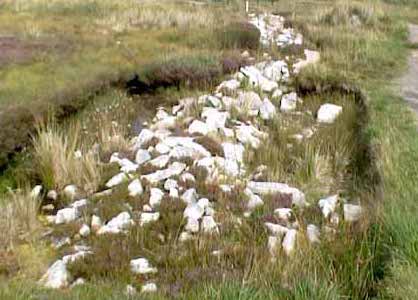
http://www.museumsofmayo.com/ceide-fields/img/neolithic-field-wall.jpg those are the rubble of the walls that have long been uncovered. Most of them are still intact under the peat up to a meter or more. I can't find a photo, but in one of neil Oliver's documentaries, the history of ancient Britain (age of farming I think ita called on youtube) he exposes an intact wall. They cover a truly expansive area, all under the peat now.
April_Fabb t1_itrmip4 wrote
Reply to comment by drmalaxz in Archaeologists have found the 17th-century warship Applet: Maritime experts believe wreck is sister-ship of Vasa, which sank off Stockholm in 1629 by MeatballDom
>1628
Cheers. Annoyed me as well.
Ferengi_Earwax t1_itrlzop wrote
Reply to comment by DontWakeTheInsomniac in Halloween in Scotland: 13 ancient customs and concepts of Celtic Halloween by MeatballDom
https://en.m.wikipedia.org/wiki/C%C3%A9ide_Fields ... the currents in the Atlantic Ocean off of spain will bring you right to Ireland. There has already been significant study of how these currents took seeds and mediterranean plants to Ireland after the ice melted after the last ice age. In Britain the plants are the ones in northern France, Denmark and Scandinavian. I linked the field system because they're well known, however there are a myriad of long barrows, Neolithic tombs and standing stones that are older than those in Britain by centuries to a millenia. It's likely they spread from Ireland. You also have the Orkney island culture (stones of stennese, skara brae) which seems to have spread South at just a little later date. Arachaeologists are trying to figure out where these rituals started in the isles. Like most things, it was probably a combination of cultures that came together. One thing is for sure, they all are very similar to each other for thousands of years showing trade routes and a widespread belief system based on the seasonal equinoxes/solstices.
DontWakeTheInsomniac t1_itrkrip wrote
Reply to comment by Ferengi_Earwax in Halloween in Scotland: 13 ancient customs and concepts of Celtic Halloween by MeatballDom
>We know farming came sooner to Ireland than Britain, but that's just what we've found yet.
Really? I'd have assumed the other way around..
Ferengi_Earwax t1_itrjo1y wrote
Reply to comment by trueslicky in Katherine Swynford and the Illicit Affair That Birthed Centuries' Worth of British Monarchs by trueslicky
John of gaunt was one of the sons of Edward the 3rd. He was the richest man in England basically. The couple recieved papal dispensation for their marriage and to make their children legitimate. You know he paid a whole lot of fleeces to the pope for that one. Kathryn swynfords sister was married to geophrey chaucer. It's said chaucer and his wife profited greatly from this family connection. Getting appointments for his family and pensions. Chaucer was given an annual stipend of a gallon of wine a day for life by Richard the 2nd. Given on a st. Day that honors artists. He had traveled Europe serving both John of gaunt and Lionel of anterp. Both sons of Edward 3. Chaucer must have been creating literary works during this time to lead up to the stipend/pension. When Henry the 4th (bolingbroke,, son of John of gaunt) took the throne, the stipend was turned into a monetary payment. By the time of his death, it seems he wasn't receiving it for whatever reason. It's the last record of chaucer asking for his pension repeatedly.
culingerai t1_itrij7t wrote
rbajter t1_itrgi7x wrote
Reply to comment by SeleucusNikator1 in Thor’s hammer amulet discovered in Sweden - Arkeonews by GullyShotta
Anything older than 1850 found in the ground.
[deleted] t1_itrdx99 wrote
Reply to comment by wolflance1 in Joseon, the predecessor of modern Korea(s) - Part 3: Japan and Qing Invasions (early 17th century) by spinnybingle
[removed]
toyyya t1_itrc8mj wrote
Reply to comment by MeatballDom in Archaeologists have found the 17th-century warship Applet: Maritime experts believe wreck is sister-ship of Vasa, which sank off Stockholm in 1629 by MeatballDom
Firstly it's worth noting that Swedish doesn't have umlauts like that and it's a separate letter completely. But disregarding the semantics we have officially used Ä and Ö instead of Æ and Ø since at the very least 1541.
Which is when Gustav Vasa's Bible was written that set new standards for the Swedish language, and the change to Ä and Ö was partly motivated by seeking a stronger separate identity from the Kalmar union (which was a Union between Norway Sweden and Denmark that we had just fought ourselves free from due to the Danes effectively controlling it).
motoxjake t1_itr9vtw wrote
Reply to comment by clampy in Archaeologists have found the 17th-century warship Applet: Maritime experts believe wreck is sister-ship of Vasa, which sank off Stockholm in 1629 by MeatballDom
Yes, you can get pretty close to it but I would have liked to venture into the ship. I totally understand why thats a bad idea and it was still a fantastic experience, regardless. Stockholm is such a beautiful city.
clampy t1_itr7amb wrote
Reply to comment by motoxjake in Archaeologists have found the 17th-century warship Applet: Maritime experts believe wreck is sister-ship of Vasa, which sank off Stockholm in 1629 by MeatballDom
It's a really neat museum, but I wish they'd let you go on/in the ship. I get why they don't, but it would have been a lot cooler if they did.
ArtlieST t1_itr5u67 wrote
Reply to comment by lurkarrunt in Archaeologists have found the 17th-century warship Applet: Maritime experts believe wreck is sister-ship of Vasa, which sank off Stockholm in 1629 by MeatballDom
Ooh look at that! Completely missed that little piece hehe. Maybe they did?
wolflance1 t1_itr5p0b wrote
Reply to Joseon, the predecessor of modern Korea(s) - Part 3: Japan and Qing Invasions (early 17th century) by spinnybingle
While a hero, Yi as a person and his naval campaign are a lot more nuanced than what is commonly taught.
Yi Sun Sin actually had a huge fleet in comparison to the Japanese during the first invasion, because not only he had his own fleet, he was also joined by Won Gyun's fleet and Yi Eokgi's fleet. Most of his campaign should be properly recognized as a joint operation of several Joseon fleets led by several admirals of equal rank.
(Dispite what Jingbirok claimed about Won Gyun, he actually spent the majority of the time during the First Invasion fighting the Japanese together with Yi—political slandering and character assassination at the time went both ways. Yi Sun-sin's exoneration as a hero comes at the expense of Won Gyun's reputation).
Yi's naval campaign also wasn't just a string of victories after victories. He actually had his share of defeats, especially towards the later part of the First Invasion after Japanese adapted to his tactics. There is even one case of Yi making false report claiming victory yet vented frustration in his personal diary.
Yi's lack of results during the later part of First Invasion contributed to Joseon king/court losing patience with him. The so-called "double agent plot" was only the last straw broke the camel's back, and the "double agent" part was almost certainly just a face-saving excuse. Japanese invaders at the time barely knew any Korean language, there's no way they could understand the intricasies of Joseon court politics to pull off such trick. It's far more likely that Konishi Yukinaga GENUINELY wanted to backstab Kato Kiyomasa through Korean hands, as he later tried it again (and almost succeed) during the negotiation.
Likewise, Battle of Myeongang was indeed legendary, but in the end Japanese still had hundres of ship, while Yi only had 13. What happened after the battle wasn't pretty. Also, Japanese had 130 ships, not 300.
Also, Battle of Noryang was led by Ming admiral Chen Lin. Yi advised him and controlled the Korean part of the coalition fleet, but Chen Lin was the commander and had the final authority , so credit/merit should be his.
lurkarrunt t1_itr5418 wrote
Reply to comment by ArtlieST in Archaeologists have found the 17th-century warship Applet: Maritime experts believe wreck is sister-ship of Vasa, which sank off Stockholm in 1629 by MeatballDom
I thought I was confused, but they changed it! Look at the bottom: "This article was amended on 25 October 2022. An earlier version referred to the ship as Applet, when it is Äpplet" Should I assume someone at The Guardian read my comment?
ArtlieST t1_itr4r2v wrote
Reply to comment by lurkarrunt in Archaeologists have found the 17th-century warship Applet: Maritime experts believe wreck is sister-ship of Vasa, which sank off Stockholm in 1629 by MeatballDom
They do use Äpplet in the article, just not in the headline! :)
metaglot t1_itr0c60 wrote
Reply to comment by irenepanik in Archaeologists have found the 17th-century warship Applet: Maritime experts believe wreck is sister-ship of Vasa, which sank off Stockholm in 1629 by MeatballDom
A 'svensker' is a thoroughly incompetent person in Danish.
panckage t1_itqxzq3 wrote
Reply to comment by zoinkability in Archaeologists have found the 17th-century warship Applet: Maritime experts believe wreck is sister-ship of Vasa, which sank off Stockholm in 1629 by MeatballDom
Not surprised by the performance though!
panckage t1_itqxkoe wrote
Reply to comment by War_Hymn in Archaeologists have found the 17th-century warship Applet: Maritime experts believe wreck is sister-ship of Vasa, which sank off Stockholm in 1629 by MeatballDom
That's right. The unusual thing about the Vasa is you could walk the whole length of the gun deck upright. Previous designs you would need to bend over to walk past the crossbeams. It is this extra height that is blamed for the ship rolling over and consequently sinking
Snooderblade t1_itqw1nw wrote
Reply to comment by ulyssesfiuza in Archaeologists have found the 17th-century warship Applet: Maritime experts believe wreck is sister-ship of Vasa, which sank off Stockholm in 1629 by MeatballDom
A and Ä are different letters that just happens to look similar but they sound nothing alike. Using an A instead of the correct letter is like using a Q instead of an O.
irenepanik t1_itqv1sh wrote
Reply to comment by metaglot in Archaeologists have found the 17th-century warship Applet: Maritime experts believe wreck is sister-ship of Vasa, which sank off Stockholm in 1629 by MeatballDom
Danskjävel is swedish for 'danish citizen'.
[deleted] t1_itqqra2 wrote
Bentresh t1_itqlubn wrote
Reply to comment by ryschwith in Archaeologists uncover Roman villa complex in Kent - HeritageDaily - Archaeology News by GullyShotta
Also, a dig season usually lasts only a couple of months for those of us in academic archaeology. It goes by all too quickly, and there’s a common (and surprisingly accurate) joke that the most exciting finds are made on the last day.
The rest of the year is spent teaching, applying for grants, publishing and presenting at conferences, etc.
Dextimus t1_itro1wv wrote
Reply to Archaeologists have found the 17th-century warship Applet: Maritime experts believe wreck is sister-ship of Vasa, which sank off Stockholm in 1629 by MeatballDom
Archaeologists were able to confirm that this was indeed the sister ship to the Vasa due to identical screws being found and the exact same steps to assemble it in its construction manual.